Experience Design Services: Hiring Guide (2026)
Learn about experience design services, which holistically design customer journeys across digital and physical touchpoints.
Building a product today is more than shipping features. Founders and product managers at young companies juggle speed with staying relevant, all while competition is a click away. When people talk about experience design services, they’re referring to help that covers user experience, customer care, brand perception and how those pieces fit together. Done well, it can turn a hard‑to‑use app into a frictionless tool and a forgettable brand into something people talk about.
Research from Nielsen Norman Group frames experience design as an approach that focuses on individual interactions, the user’s path over time and even the lifetime connection people have with a company. In practical terms, this means thinking through every touchpoint, not just the screens. That’s why founders and product leaders are paying attention.
What are experience design services?
We see these patterns play out every day. As a consultancy that specialises in experience design services, we’ve learned that working from the overall experience down to the details saves time and reduces rework. It helps early‑stage teams match their roadmap with what matters most to customers. Throughout this piece we’ll explain why experience design services give early‑stage teams a practical edge by uniting strategy and execution.

Rather than another buzzword, experience design services act as an umbrella over several disciplines. They cover the groundwork of user experience (UX), the broader customer path, interface development, visual aesthetics and service innovation. Nielsen Norman Group describes experience design as a way to create high‑quality, optimized experiences across all parts of a product or service. It isn’t just about crafting an interface; it’s about understanding how someone hears about you, uses your product, gets support and what keeps them coming back. The work is based on research with real users, and it aims to satisfy human needs while still meeting business goals.
This holistic focus sets it apart from straight UX or interface design. User experience usually looks at usability and emotion on screens, while interface design is closer to colors and buttons. Experience design ties those pieces together with brand strategy, support channels and even physical touchpoints. It’s about making sure your product feels coherent whether someone is using a mobile app, reading an email or chatting with support.
Why should startups care about experience design services?
For early‑stage teams, time to market matters. You may be fighting to build something people love before funds run out. Investing in experience design services may sound like a luxury, but the data points in a different direction. Zendesk reports that 52% of customers will switch to a competitor after a single bad impression. In the same article, companies that focus on customer experience see an 80% increase in revenue. Another study points out that 49% of people who left a brand in the past year did so because of poor service.
Poor design isn’t just an annoyance; it drives churn. Enozom’s 2024 UX statistics show that 88% of consumers won’t return after a bad experience, and every dollar invested in UX yields roughly a $100 return. When budgets are tight, that ratio is hard to ignore. Design isn’t just visual polish; it’s the difference between hitting product‑market fit and chasing sign‑ups that don’t stick around. Services that handle the full experience can also help you think ahead. Instead of patching holes later, you lay a foundation for service innovation and a consistent presence across web and mobile.
What are the core components of experience design services?
To make sense of experience design, it helps to break the umbrella into its building blocks. Each term in the outline maps to a specific piece of the puzzle:
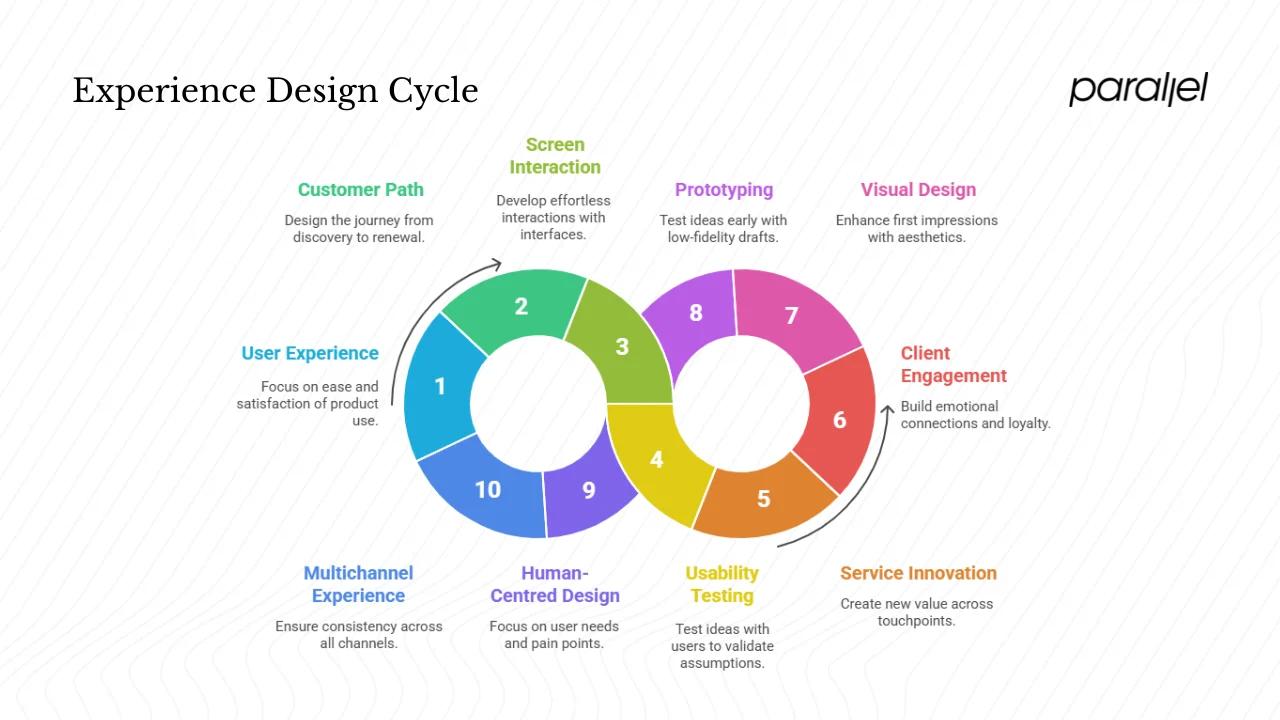
- User experience: The base. This looks at how easy and satisfying it is for someone to use a product. Good UX pays attention to emotions, behaviours and usability.
- Customer path: Design from discovery through support and renewal.
- Screen interaction and interface development: Build how people interact with buttons, input fields and flows so tasks feel effortless.
- Usability testing: You test your ideas with actual users to confirm that your assumptions hold up. A U.S. government resource describes usability as measuring how easily people can accomplish their goals. It’s just one part of the larger user experience umbrella, but skipping it risks shipping something that doesn’t work in the real world.
- Service innovation: Creating new value across touchpoints. It could mean rethinking onboarding, adding a self‑serve help center or merging offline and web support.
- Client engagement and brand experience: People don’t just use products; they build emotional connections. A consistent voice and responsive support build trust and loyalty. Zendesk’s research found that customers are more likely to stay with a brand when their problems are solved quickly.
- Visual design: The surface layer. Color, typography and layout affect first impressions—94% of first impressions are design related.
- Prototyping and wireframing: Low‑fidelity drafts help test ideas early with users.
- Human‑centred design and strategy: Harvard Business School explains that human‑centred design is a problem‑solving technique that puts real people at the centre of the process. Designers look at user needs and pain points, run through phases like clarify, ideate, develop and implement, and evaluate concepts based on desirability, feasibility and viability. This mindset keeps you from chasing features that look good on paper but fail in reality.
- Multichannel experience: AMA reports that 73% of shoppers use multiple channels and businesses with integrated channels retain up to 89%. Consistency across channels matters.
What is the step-by-step experience design process?
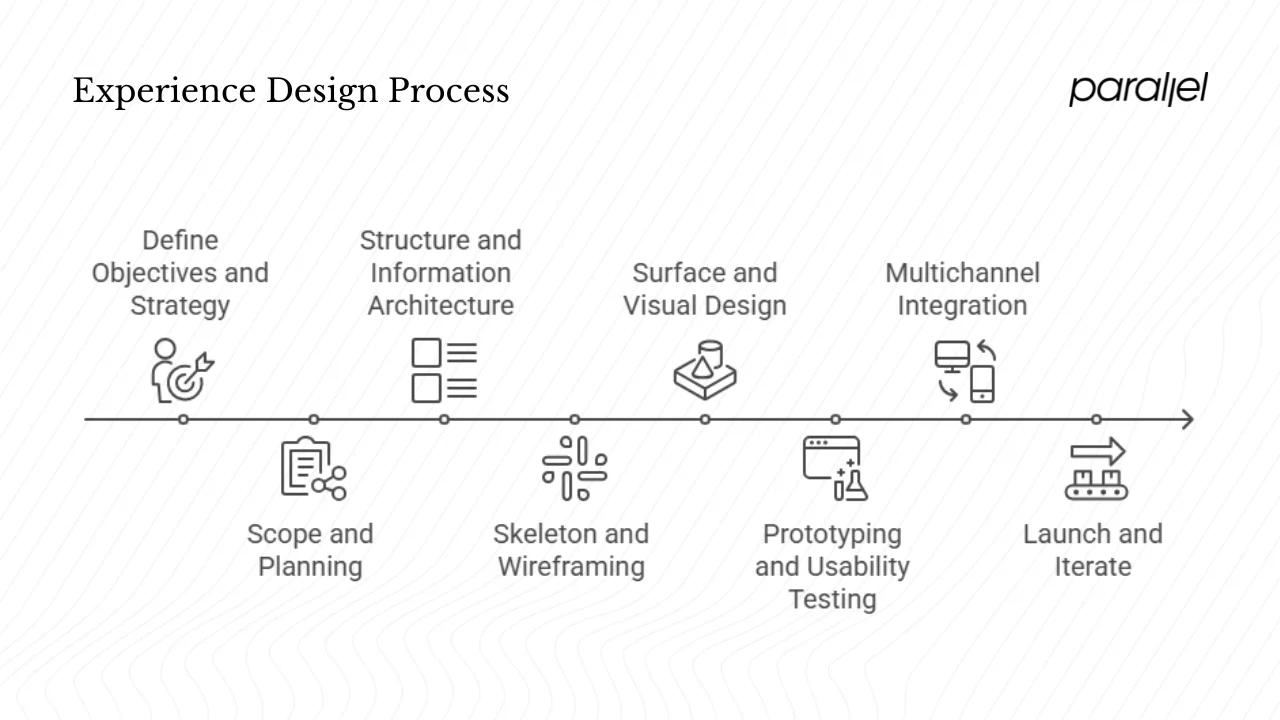
Hiring a team or consultancy can feel like a black box. Here’s a plain‑spoken view of the process, drawn from our own work at Parallel.
- Define objectives and strategy: Start by setting goals and matching them with user needs. What problem are you solving, who has that problem and how will success be measured? This mirrors the top plane of Jesse James Garrett’s five planes of user experience, where strategy comes before scope or structure.
- Scope and planning: Outline which channels you’ll cover (web, mobile apps, support chat), what deliverables you need (research findings, wireframes, prototypes) and your timeline. Getting clear here prevents misaligned expectations later.
- Structure and information architecture: Decide how content and flows will be organised. This includes mapping the user path, designing navigation and making sure people can find what they need without friction.
- Skeleton and wireframing: Early mock‑ups for layout and interaction patterns. These simple diagrams help teams discuss ideas and catch problems early.
- Surface and visual design: Polishing the look and feel. Think colours, typography, spacing and iconography. This is where the brand’s personality shows up.
- Prototyping and usability testing: Build interactive models and put them in front of users. Iterate quickly based on feedback. As that government source explains, usability testing measures whether users can reach their goals easily.
- Multichannel integration: Make sure the experience feels smooth across every channel. AMA’s findings show that customers who switch between channels and still see consistent branding are more loyal and have a higher lifetime value.
- Launch and iterate: Ship the product, but keep learning. Ongoing testing and incremental improvements are part of the work. Technology and user expectations keep changing; your product should, too.
What skills and mindset should you look for when hiring?
Founders and product leaders often ask us what to look for when hiring or contracting experience design services. It’s not about glossy portfolios alone. A good designer thinks broadly and critically. Here are attributes we look for:
- Research chops: They should be comfortable interviewing users, running surveys and synthesising insights. Human‑centred design starts with understanding real people’s needs.
- Strategic thinking: Can they connect user needs to business outcomes? If they speak in features without explaining the problem those features solve, be wary.
- Visual skills with restraint: Beautiful visuals matter, but they should support the user’s goals rather than distract.
- Communication and collaboration: The best designers work iteratively and involve engineers, product leads and customer support. Good collaboration ensures design decisions aren’t made in a vacuum.
- Adaptability: A startup’s needs change quickly. Designers should be open to revisiting assumptions, interpreting feedback and shipping incremental improvements.
Delivery methods: freelance vs. agency vs. in‑house
- Freelance: Great for specific tasks like a research project or a usability audit. Pros: flexibility and cost‑effectiveness. Cons: less continuity and limited capacity.
- Agency: Agencies like Parallel bring a cross‑functional team and structured process. They excel when you need research, design and development working together.
- In‑house: Hiring a full‑time designer means deep product knowledge and faster iteration. It makes sense when design is central to your product or when you have ongoing work that justifies the cost.
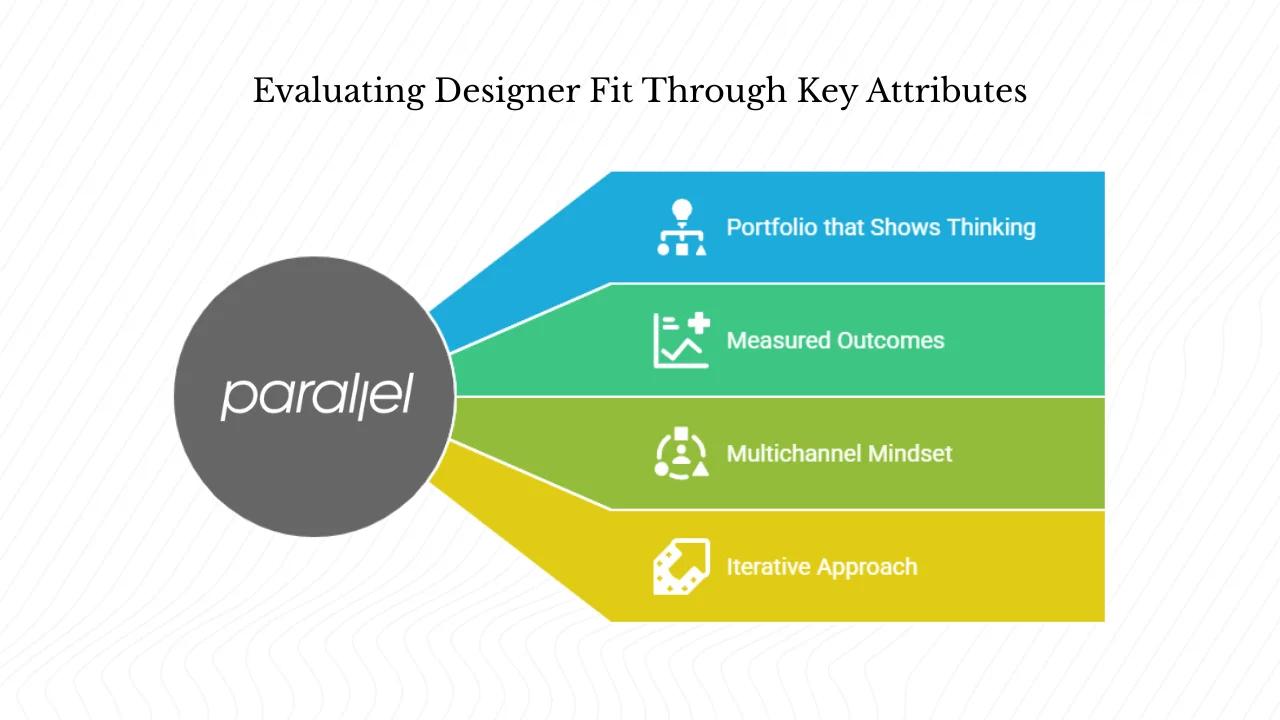
How can you evaluate whether a designer or team is the right fit?
How do you know someone is right for your project? Look for evidence:
- Portfolio that shows thinking – A thoughtful case study explains the problem, the process and the outcome, not just the final visuals. This demonstrates that the designer worked strategically, not just visually.
- Measured outcomes – Case studies should include results such as improved conversion rates or reduced support tickets, not just screenshots. According to Zendesk, businesses that tie customer satisfaction to growth and profitability are more likely to secure more budgets.
- Multichannel mindset – Does the work consider web, mobile and offline interactions? AMA’s research shows that integrated channels retain more customers.
- Iterative approach – Good designers work in cycles, testing and refining. They understand that the first version will have flaws and are willing to learn from users.
How does Parallel approach experience design?
At Parallel, we’ve seen early‑stage teams fall into common traps: over‑complicating onboarding, ignoring support flows, or focusing solely on colours and typography without addressing the underlying structure. We’ve helped startups cut their time‑to‑value by simplifying sign‑up flows and clarifying value propositions.
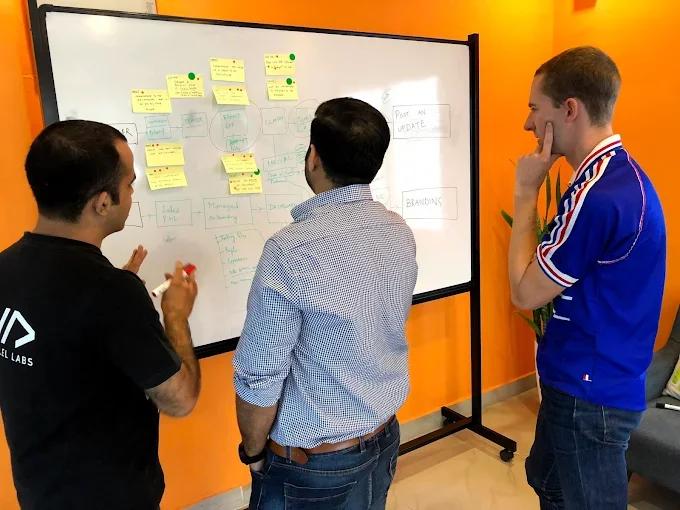
In one case, rethinking a complex onboarding path reduced drop‑off by 30% within a month. In another, adding a help centre and in‑product tips cut support tickets by 25%. These gains come from combining research, design, and continuous testing—not from guesswork. We bring that mix to every engagement.
Conclusion
It’s easy to see design as something you layer on at the end. But experience design services remind us that design is the product. Poor experiences drive people away, while thoughtful ones build loyalty. Research shows that shoppers who use several channels to interact with a brand are more loyal and have higher lifetime value. Businesses that invest in customer experience enjoy higher revenue and are more resilient when markets shift.
For founders and product leaders, the takeaway is simple: see design as a strategic lever, not a finishing touch. A human‑centred process keeps you grounded in real problems. Testing with actual users prevents costly missteps. A multi‑channel perspective ensures your brand feels consistent wherever people encounter it. Done well, experience design services become a force multiplier for product‑market fit and customer loyalty.

As the Founder and CEO of Parallel, Robin spearheads a pioneering approach to product design, fusing business, design and AI to craft impactful solutions.


