What Is Product Operations? 2026 Guide & Planning Stack
What is product operations? Discover the 2026 guide to modern product ops stacks. Learn how to maintain data consistency across platforms and automate workflows.
Table of Contents
When you’re building a product from scratch, momentum means everything. Yet even the sharpest founders and product managers (PMs) eventually feel the drag of misaligned teams, messy data and haphazard communication.
What is product operations? It’s the secret weapon that keeps your product machine humming. Product operations (often shortened to product ops) is a structured way to optimise the work between product, engineering, design and customer success, ensuring that the right information flows, decisions get made and users aren’t left waiting.
In early‑stage startups this might sound overkill, but the reality is that good operations at the beginning prevent painful chaos as you grow. In this article I’ll unpack what product operations means, why it matters for nimble teams, and how you can start building a lightweight function that scales with your ambitions.
What is product operations?
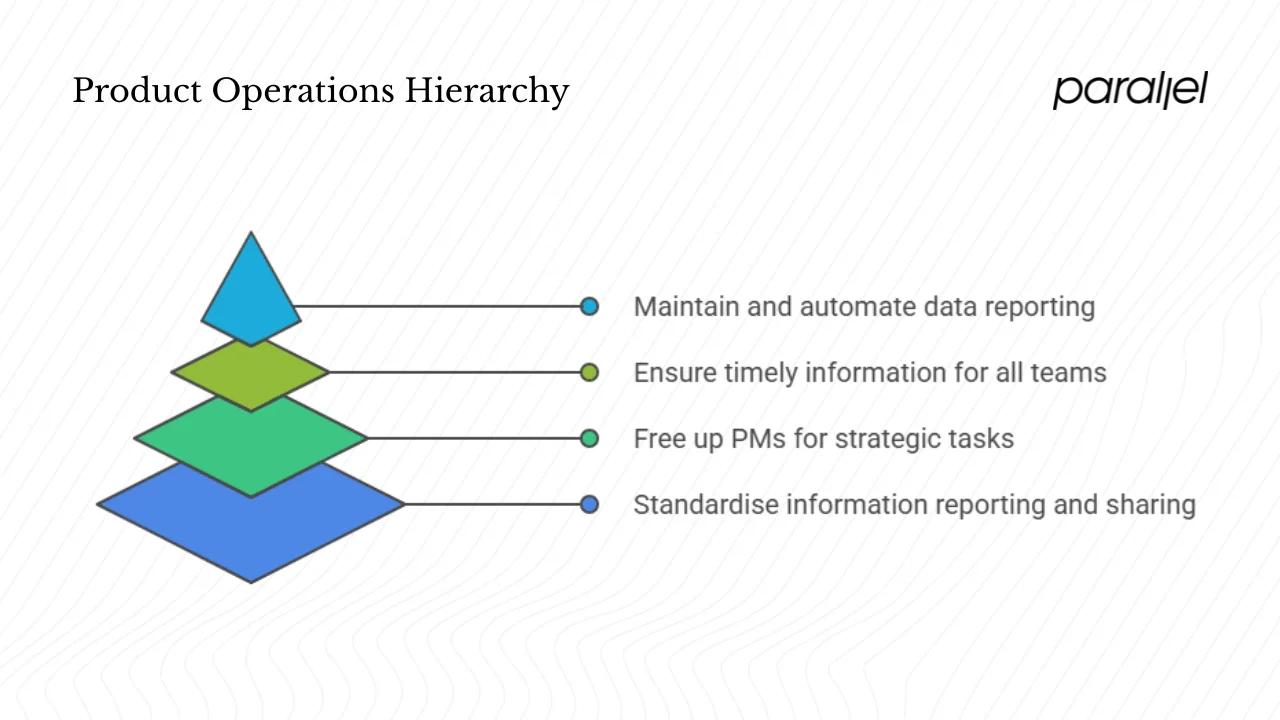
The operational role of product operations has exploded over the past five years. Rather than inventing a new bureaucracy, product ops is an enabling function that sits at the intersection of product, engineering and customer success. Its purpose is to free up product managers to focus on strategy, discovery and decision‑making while ensuring that data, tooling, communication and processes work smoothly.
A 2024 Product Ops Playbook notes that product ops provide strategic support, business alignment, data‑informed decision making, product alignment, iterative improvement and cross‑functional collaboration—pillars we’ll explore later. In other words, product ops are to the product team what a trainer and nutritionist are to an elite athlete: enabling peak performance without taking the athlete’s place.
On Reddit and in practitioner communities, product operations is often described as “product management of product management.” It plays the same role that DevOps plays for software development—standardising tools and processes so the core job runs smoothly. One Redditor compares product ops managers to test pilots of an experimental aircraft; they take on the risky work of experimenting with processes and tools so product managers can fly safely without reinventing the wheel. These colourful analogies underscore the same truth: product ops exists to streamline, support and amplify rather than to control or overrule the product function.
Why product operations matters in early‑stage startups
At small startups everyone wears multiple hats, and workflows are often “organised chaos.” In this environment a dedicated operations role feels like a luxury. However, there are compelling reasons to start thinking about product ops earlier than you might expect:
- Preventing chaos before it happens: As startups scale from three engineers to 30 people, manual coordination breaks down. The Product Ops Playbook points out that organisations often start experiencing communication gaps around 150 people—long before reaching the size of a Fortune 500 company. Product ops addresses these gaps early by standardising how information is reported and shared.
- Focusing PM time on the highest impact work: Jock Busuttil notes that the purpose of product ops is to free up product managers to focus on their core role—thinking strategically, acting tactically and taking informed decisions. In early‑stage companies, PMs often get bogged down in data pulls, tool wrangling and stakeholder updates. Offloading these tasks gives them more bandwidth for user interviews, research and experiments.
- Maintaining cross‑functional alignment: Product ops is about making sure the right people have the right information at the right time. Without a single owner for tooling and process, it’s easy for engineering to adopt a new system that breaks the onboarding flow or for marketing to miss critical product changes. LaunchNotes research emphasises that product ops helps maintain a one‑to‑many relationship of critical interactions as a business grows.
- Scaling data hygiene: Data scattered across spreadsheets, dashboards and analytics tools slows down decision‑making. Product ops teams build and maintain dashboards, perform analysis and automate metrics reporting so teams can make data‑driven decisions quickly.
Even nimble startups benefit from this discipline because you build scalable practices that grow with you. The 2025 State of Product Ops report notes that 96% of organisations surveyed now have some form of product ops function, and nearly half have dedicated, centralised teams. Early adoption prepares you for scale and sends a strong signal to investors about operational maturity.
Core responsibilities & role scope
Product operations covers a surprisingly broad remit. In my experience—and corroborated by product thought leaders—the role spans several key areas:
- Strategy & roadmap support: Product ops helps maintain alignment across the product lifecycle. LaunchNotes’ six pillars include strategic support, ensuring teams stay on track through regular roadmap maintenance and refinement and removing barriers they encounter. Product ops managers facilitate quarterly planning, coordinate product reviews and chair meetings to drive clear decisions.
- Data & analytics: They build dashboards, extract and analyse data, and help product teams incorporate metrics into their decision‑making. They ask: Do we have enough data to inform this decision?. This function overlaps with analytics but differs in that product ops focuses on the operational side—making data easily consumable and actionable.
- Tooling & vendor operations: Managing the portfolio of product management tools is a core function. According to the 2025 report, 81% of product ops teams oversee tool and platform administration. This includes integrating product analytics, feedback collection, experiment management and communication tools so they work together.
- Process & workflow standardisation: Product ops establishes templates for product requirements documents, roadmap formats, RACI matrices and acceptance criteria. They document handoff processes so tasks don’t fall through the cracks. Practitioners like Graham Reed emphasise reducing duplication, clarifying decision‑making and removing unnecessary friction.
- Stakeholder communication & training: They translate roadmaps and product decisions into digestible updates for marketing, sales, customer success and executives. The report shows that 93% of product ops teams drive cross‑functional alignment, and 90% manage processes and workflows. They also create training materials and onboarding plans for new team members.
- Customer feedback and experimentation: In user‑centric companies, product ops manages feedback loops, ensuring customer insights reach product teams and are acted upon. They also support experimentation by standardising methodologies and documenting results.

In essence, product ops is a “golden thread” linking objectives, roadmaps and outcomes across teams. The role is sometimes described as a right‑hand to the chief product officer: a partner who ensures the product org’s system runs smoothly.
The pillars of product operations
Different thought leaders propose different ways of structuring the product ops function. Here’s how two well‑known frameworks stack up.
1) Three pillars (Perri & Tilles / Busuttil)
Melissa Perri and Denise Tilles, whose 2023 book Product Operations is widely referenced, summarise product ops into three core pillars:
- Business data & insights. This pillar focuses on gathering data about how the product, company and competitors perform; automating metrics reporting; and ensuring consistent definitions. Busuttil likens this to Indiana Jones digging through ancient structures to find hidden treasure—it’s about turning messy data into clear insights.
- Customer & market insights. Product ops supports user research and market analysis by organising logistics, streamlining recruitment and sharing findings across the organisation. The goal is to enable product managers and user researchers to conduct studies more effectively.
- Shared processes & practices for building products. This involves providing consistent templates, workflows and tools so each product team doesn’t reinvent the wheel. It’s about coaching teams, evaluating whether processes are fit for purpose and anticipating product people’s needs.
2) Six pillars (LaunchNotes playbook)
The Product Ops Playbook broadens the lens to six pillars of product operations:
- Strategic support – Maintaining roadmaps, guiding planning sessions and removing obstacles.
- Business alignment – Ensuring product plans align with the wider business strategy and scaling needs.
- Data‑informed decision making – Building dashboards and embedding data into planning.
- Product alignment – Monitoring the product organisation’s priorities and circulating crisp product updates.
- Iterative improvement – Continuously evaluating and refining product processes.
- Cross‑functional collaboration – Facilitating collaboration across teams using similar methods and tools.
The playbook notes that these pillars span from strategic to highly tactical work and emphasises that communication workflows are the glue connecting them all. In other words, a product ops team can only deliver on these pillars if it builds open, accessible lines of communication.
3) Comparing the frameworks
While one framework emphasises three broad areas and the other six specific pillars, both share a common philosophy: product operations exists to collect and leverage data, support research, and standardise processes. The table below illustrates the overlap:
A lean, early‑stage startup might focus on the three‑pillar model and layer more nuanced pillars as the team grows. The key is to avoid over‑engineering; start with the most painful area—often data and reporting—and expand as your product organisation matures.
Product operations vs product management
Product operations is sometimes confused with product management or program management. It’s important to clarify the differences:
- Ownership of strategy vs enabling execution: Product managers own the product vision, strategy and prioritisation. Product ops supports them by ensuring the necessary information, processes and tools are in place. As user research site UserGuiding explains, product operations aims to support the product team and make their process more efficient with data and technology.
- Problem focus: UserGuiding notes that product management focuses on solving problems users might face (new features, functionalities), whereas product operations solves problems within the production process. Product ops prepares documents about versions and shortcomings, trains marketing and sales teams on the product, and ensures stakeholders are equipped with up‑to‑date information.
- Stakeholder relationships: PMs work closely with customers and engineers; product ops collaborates with stakeholders across the business—marketing, sales, customer success, finance—to ensure alignment.
- Value definition: PMs define value as features and functionality; product ops defines value as the ability to execute on those plans efficiently—through training, communication and process.
It’s also worth noting that product ops is not project management. While both roles involve coordination, project management tends to drive specific initiatives with a start and end date. Product ops builds the infrastructure that enables multiple projects to succeed. Think of product ops as the operating system for your product org; project managers are applications running on that system.
Is product operations a good role?
Across dozens of conversations and community threads, most practitioners agree that product ops is a rewarding and high‑impact career path. Here’s why:
- High leverage. Product ops roles reduce the administrative burden on product managers, increase team efficiency and enable faster decision‑making. By doing the “invisible work,” they allow product teams to focus on delivering customer value.
- Breadth of exposure. Product ops managers sit at the nexus of product, engineering, design, marketing and customer success. They build relationships across the business and gain a holistic understanding of how products are built and sold.
- Opportunities for influence. When done well, product ops functions act as trusted advisors to senior leadership. They influence how decisions are made, how data is used and how teams communicate. According to Productboard’s 2025 report, the top product ops responsibilities—cross‑functional alignment (93%), process management (90%) and tooling administration (81%)—are all critical levers in shaping product strategy.
That said, there are caveats. In very small startups (fewer than 10 people) a dedicated product ops role might be overkill. The function can also be misunderstood or under‑utilised if leadership doesn’t buy into its value. The key is to scale the role as the organisation grows and to ensure there’s clarity on responsibilities. Done right, product ops can be a powerful accelerator for growth.
How to get started with product operations
Ready to build your first product ops muscle? Here’s a pragmatic approach:
- Start with one versatile person. Look for someone who is process‑oriented, comfortable with data and empathetic toward both engineers and customers. They don’t need the “Product Ops” title; the important part is capability.
- Identify your most painful pillar. In early‑stage startups, the biggest pain usually lies in data collection, roadmap alignment or tooling. Choose one pillar (e.g., data‑informed decision making) and create a simple but repeatable process: build a unified metrics dashboard; set up a standard template for roadmaps; centralise feedback collection.
- Iterate and add pillars. As your organisation grows, extend the scope to include strategic support, onboarding, experimentation or communication workflows. Keep processes lightweight and adjust them as you learn. Over‑engineering is the enemy.
- Evangelise the value. Help PMs embrace product ops as a partner rather than an overhead. Show them how offloading busy work lets them focus on deeper discovery and strategy. Celebrate wins like faster decision cycles or smoother releases.
- Measure impact. Use metrics such as product team satisfaction, time‑to‑decision and roadmap alignment. The Productboard report notes that 54% of product ops teams measure their effectiveness through product team satisfaction and 37% use collaboration metrics. Choose metrics that resonate with leadership.

Real‑world signals from the trenches
Community voices provide colourful metaphors and hard‑earned wisdom:
- “Product ops is product management of product management.” This popular Reddit description captures the meta nature of the role.
- “Test pilots of an experimental aircraft.” Another Redditor likened product ops managers to test pilots who risk their own time to trial new processes and tools so others can fly safely. It underscores the experimental, continuous improvement mindset.
- “Golden thread connecting goals, customers, initiatives, resources and execution.” Practitioners often use this phrase to illustrate product ops’ connective role. By weaving data and communication together, product ops ensures that the organisation moves with purpose and clarity.
These metaphors reflect how the community perceives product ops—not as an administrative back‑office role but as a strategic enabler.
-
Conclusion
Product operations may seem like a niche function, but in reality it’s an essential enabler of clarity, efficiency and alignment. By standardising processes, championing data and fostering cross‑functional collaboration, product ops frees product managers to focus on what they do best: understanding users, shaping strategy and building great products. As the 2025 state of product ops report reveals, nearly every organisation now invests in some form of product ops. Whether you’re an early‑stage founder, a PM, or a design leader, the message is clear: don’t wait until chaos forces your hand. Invest in product operations early to boost user experience, ensure data hygiene and accelerate your product’s velocity.
FAQ
1) What do you mean by product operations?
Product operations is an enabling function that optimises the intersection of product, engineering and customer success. It frees up product managers by standardising processes, managing tools and data, and ensuring clear communication. Think of it as the product management of product management.
2) Is product operations a good role?
Yes, particularly in growing product‑led organisations. Product ops reduces administrative burden, increases efficiency and allows PMs to focus on higher‑impact activities. It also offers broad exposure across teams and the opportunity to influence strategy. However, in very small teams the role can feel like overkill; start small and scale as you grow.
3) What are the three pillars of product operations?
According to Melissa Perri and Denise Tilles, the three pillars are business data & insights, customer & market insights, and shared processes & practices for building products. These pillars cover data gathering, research support and process standardisation.
4) How do the six pillars differ?
The Product Ops Playbook outlines six pillars—strategic support, business alignment, data‑informed decision making, product alignment, iterative improvement and cross‑functional collaboration. This framework offers a more granular view that can be useful in larger, more complex organisations.
5) What is product operations vs product management?
Product management owns the product’s vision, strategy and prioritisation. Product operations enables product managers by managing data, tools and processes. UserGuiding explains that product operations makes the product team’s work more efficient with data and technology, while product management remains focused on solving user problems. Product ops is a support and coordination role—not a replacement for PMs.

As the Founder and CEO of Parallel, Robin spearheads a pioneering approach to product design, fusing business, design and AI to craft impactful solutions.